Sunday, April 02, 2023
Robinson Genealogy in Wales But DNA Shows Ireland
Nadene Goldfoot

Much to my surprise, my grandfather told me when very young that his people had come from Wales. Genealogy shows England like so many other Robinsons living in New England show that they also came from England. New England was crawling with Robinsons.
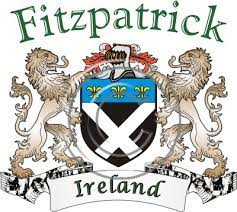
The most important DNA test of my male cousin shows that we are connected to the FitzPatrick Irish of Ireland. They were the first to discover our connection by the Y haplogroup test.

Our geography means that Ireland and Wales share a common maritime story. The Irish Sea, the narrow strip of water which connects rather than divides us, has been traversed by our peoples over millennia.
The Irish Sea was formed in the Neogene era. Notable crossings include several invasions from Britain. The Norman invasion of Ireland took place in stages during the late 12th century from Porthclais near St. Davids, Wales, in Hulks, Snekkars, Keels and Cogs to Wexford Harbour, Leinster. The Tudors crossed the Irish Sea to invade in 1529 in caravels and carracks. In 1690 the English fleet set sail for the Williamite War in Ireland from Hoylake, Wirral, the departure becoming permanently known as King's Gap as a result.
Figures from Ireland's 2016 Census show that 1.7 per cent of the population speak Irish Gaelic every day. In Wales, it's 16.3 per cent of the population speaking Welsh every day. While both languages originate from the same source, the written and spoken forms are different. The languages that we refer to today as being of Celtic origin are Irish Gaelic, Scottish Gaelic,

Known also as Irish Gaelic or Gaeilge. (In the past and still very occasionally can be called Erse) Number of Native Speakers: 40-80,000 Everybody attending school in Ireland learns Irish and many profess to speaking the language according to the National Census. Irish is the first official language of the country but the working language for most things is English. Although, the government supports the language in many ways and introduced a Language Act in 2003 to increase the level of public services in Irish, the biggest success in the revival of the gaelic language is the growth of gaelscoileanna which immerse kids in the language and the success and popularity of the TV channel TG4.
Welsh is also known as Cymraeg or y Gymraeg Approx 600,000 speakers: Welsh is the Celtic language with in the healthiest state. In Wales there has been a real and quite successful effort to restore the language. The number of speakers is actually increasing. Both the teaching of the language to all children under the age of 16 and the popularity of Welsh media channels have helped reverse the decline. The Welsh Language Act of 1993 also ensures that the public can avail of services in English or Welsh.
Norman Invasion of Ireland:
Anglo-Normans gradually conquered and acquired large swathes of land from the Irish, over which the kings of England then claimed sovereignty, all allegedly sanctioned by the Papal bull Laudabiliter. At the time, Gaelic Ireland was made up of several kingdoms, with a High King claiming lordship over most of the other kings. The Norman invasion was a watershed in Ireland's history, marking the beginning of more than 800 years of direct English and, later, British, involvement in Ireland.
In May 1169, Anglo-Norman mercenaries landed in Ireland at the request of Diarmait mac Murchada (Dermot MacMurragh), the deposed King of Leinster, who sought their help in regaining his kingship. They achieved this within weeks and raided neighbouring kingdoms. This military intervention was sanctioned by King Henry II of England. In return, Diarmait had sworn loyalty to Henry and promised land to the Normans
The Irish used to raid the west coast of Britain and carry off slaves. They may even have tried a few attempts at colonisation. This would have brought them into conflict with the Welsh (of course this is before either Wales or Ireland were united countries).

The Normans conquered England then conquered Wales. Later they would conquer Ireland as well. That particular conquest is usually erroneously attributed to the English but was led by Normans from Wales.In many ways, the famous Battle of Hastings in 1066 was just the beginning for the Normans, with many challenges awaiting them in the British Isles. In order to secure the Welsh border, William the Conqueror (recently crowned as King of England) established loyal Norman nobles in strongly garrisoned Earldoms along the frontier. What followed was decades of warfare and diplomacy as these "Marcher Lords" sought to extend their domains by subjugating the stubbornly independent Welsh.
Of course they were not Welsh as such but Welshmen would have been among the soldiers that invaded Ireland.
Similarly pretty much every time British armies went over to Ireland, there would have been Welshmen among the armies.But there has never been a war between Wales and Ireland. Wales only briefly existed as a unified state before being conquered by the Normans; thereafter it was part of England or Britain. Similarly, there was never a state called ‘Ireland’ before the Normans got there.

Wales had been in complete disarray. In August 1063, Gruffudd ap Llywelyn was killed by his own men; his head and the figure-head of his ship were dispatched to Harold Godwinson and so, eventually, to Edward the Confessor, as the trophies of a signal victory. Within Wales itself, his death left a vacuum of authority and power. His hegemony had been founded on military might and personal dependence; it had no institutional base that could outlast his own downfall. The natural fissiparousness of Welsh ‘political’ life — if such a genteel term may be used for the litany of family and inter-dynastic conflicts, raids, kidnappings, and murders — now reasserted itself. Puppet rulers, political exiles, and adventurers competed desperately with each other and joined forces in a perplexing kaleidoscope of temporary alliances to further their ambitions. Rarely, even by its own standards, was the Welsh ‘political’ scene more fluid, its allegiances more brittle and its supremacies more short-lived than in the later eleventh century. They were ripe to be plucked by England.

President of Ireland, Mary Robinson, married to a Robinson: In 1970, she married Nicholas Robinson, with whom she had a relationship since they were law students and who was then practising as a solicitor. Together they have three children. Nicholas Kenneth Robinson (born 9 February 1946) is an Irish author, historian, solicitor and cartoonist who is the husband of the 7th President of Ireland and former United Nations High Commissioner for Human Rights, Mary Robinson.
My male cousin's father's name was Edward Kenneth Robinson.
My male cousin is Kenneth Arthur Robinson b: 1946.
My son was born on 9 February 1953.
It's an interesting beginning.
Robinson was born in Amsterdam, Netherlands, in 1946, to a wealthy middle-class Anglican family. He was born to Howard Robinson and Lucy Robinson , the third in a family of four boys. His father was an accountant who founded the City of Dublin Banker and was a prominent freemason of the Grand Lodge of Ireland. The Robinson family had been coopers associated with the brewing business of the Guinness family. Nicholas's grandfather was a coal importer.

I have a big problem with President Mary Robinson.
She does not back Israel. She votes against Israel while I'm holding dual citizenship and am a strong
advocator for Israel, writing in defense every day. At least I'm
not related to her, but possibly her husband.
Robinson served as the twenty-fourth, and first female, chancellor of the University of Dublin. She represented the university in the Seanad for over twenty years and held the Reid Chair in Law. She was succeeded as chancellor by Mary McAleese, who had also succeeded her as president of Ireland. Was her husband, by any chance, from the Fitzpatricks?

The oddest fact is that my grandfather, Jewish with ancestry from Lithuania, moved to Dublin after visiting England. From there he was on a ship to Canada and then wound up in Idaho marrying my grandmother/Bubby, also a Litvak. Quite a few Goldfoots/Goldfus were living in Dublin. As coincidences happen, he chose the same business as my Robinson grandfather in Portland, knew each other, that business was of having a wagon with horses and going to the docks and delivering boxes to people and businesses. The difference was that Robinson was from a farm and handled 4 horses easily with his wagon, while Goldfoot with one horse couldn't do it, and the horse was soon startled, threw him out of the wagon, head was hit and he died in hospital.
My connection of Robinson to the Norman invasion of Ireland seems like the time element such a connection took place. It goes way back. In the meantime, my Robinson ancestors have tried to make their way known to me through genealogy.
… (more).
Labels: England, Fitzpatrick, New England, Vermont, Wales

Tuesday, November 15, 2022
Grandpa Frank H. Robinson and Family Religion
Nadene Goldfoot

Grandpa Frank Hugh Robinson (June 21, 1870-May 27, 1952) was poor by today's standards. He and Grandma Augusta Gustafson, immigrant from Sweden, lived in a teeny house built by his son with his own hands, Ed, that lie next to Ed's house. Next door to Ed on his other side was his father and mother in-law, the Kalkwarfs. Ed was a mechanic of tractors and farm machinery.

Both had been married once before with Frank having Alice Mitchell as a wife and 2 girls: Ruth Evelyn and Lillian Fern, and Augusta-- married to Swen Fred Olson and daughter Dorothy who died of appendicitis when she and Frank were first married in 1910. Augusta was the head cook at the Pierce Mansion in Iowa while Frank was the ice man who delivered ice to homes. Frank was usually working as a Teamster with 4 horses. Frank also had great handwriting, so was secretary of his Teamster Union.
So Grandma had to also work for a living, tailor with Olson and a Cook for a mansion. By marrying Frank, she took care of his girls and then had 2 more children herself. My mother was born with 2 older half-sisters. Our Robinson grandparents died in Hillsboro, Washington County, Oregon.
In those days, there was no social security; you just lived with one of your children when you couldn't handle the economic life anymore on your own. They were lucky to have had a son, Edward Kenneth by March 1915 who watched over them. He was my mother's brother. Frank was not quite 82 years old when he died-81years 11months 6 days to be exact.

Abiathar had a special bull that he put in the pasture. He didn't realize it, but Frank had his favorite horse in that pasture as well. Now, a bull with a horse in the same pasture spells danger and death. When Abiathar realized what his father had done, he asked permission to move his horse out but Abiathar said NO. Abiathar was a very religious Methodist as far as I could tell. It was the start of the Sabbath and work like that was denied. Although the Methodists have never been against work on the Sabbath. They could have been of the 7th Day Adventists who did not work on Sunday.
"The Seventh-day Adventist Church had its roots in the Millerite movement of the 1830s to the 1840s, during the period of the Second Great Awakening, and was officially founded in 1863. Prominent figures in the early church included Hiram Edson, Ellen G. White, her husband James Springer White, Joseph Bates, and J. N. Andrews. Over the ensuing decades the church expanded from its original base in New England to become an international organization. Significant developments such the reviews initiated by evangelicals Donald Barnhouse and Walter Martin, in the 20th century led to its recognition as a Christian denomination.....While initially it was believed that Sabbath started at 6 pm, by 1855 it was generally accepted that Sabbath begins at Friday sunset."
(We do have many Bates on our tree from Tunbridge, Vermont-next door to Royalton).
Then again, Abiathar could have been a Mormon. "Mormons (LDS) believe the Sabbath should be set apart from the other six days of the week. It is the Lord’s day, a day when men and women rest from work and spend time worshipping the Lord. Members are encouraged not to work, nor go shopping, which requires others to work". "Joseph Smith was born on the town line between Sharon and Royalton on December 23, 1805. Although Joseph Smith, founder of Mormonism, was born in the adjacent town of Sharon near the Royalton boundary, the Joseph Smith Birthplace Memorial lies in the town of Royalton.
The LDS Church owns 350 acres of pretty, landscaped forest and hilltop leading up to a memorial pillar. Abiathar's middle name was Smith. Hmmm. Was Amos IV Robinson b: 1797, his father, a Mormon? Brigham Young succeeded Smith as the Mormon's leader. Brigham Young b: June 1, 1801 – August 29, 1877) He was the 2nd president of The Church of Jesus Christ of Latter-day Saints (LDS Church), from 1847 until his death in 1877. During his time as church president, Young led his followers, the Mormon pioneers, west from Nauvoo, Illinois to the Salt Lake Valley So the Mormons also went from Vermont to Illinois.
Our family were Methodists, though they could have been another before that. One thing we do know, though was that Abiathar did not allow any work on the Sabbath. (Actually, this does my heart good as my my mother married a Jewish man and then converted to Judaism, and I'm Jewish. I try very hard to not work on the Sabbath with typing the "work").
The result was that the horse was killed. Abiathar left home for good. He was at least 16 years old.
Abiathar had 10 siblings. In those days, people tended to have as many children as they could in order to help their parents. There was Edward, Edgar, Abiathar W born in 1854 who died in 1865 in Quebec with the family at age 11, Nellie Elizabeth, Emma, John C, Julia, William S, Frank-my grandfather b: June 21, 1870, Minnie J and Arthur Roy born on May 30,1880.
Abiathar was the last person I could positively find in records. His parents and line are my highly educated guess as to what Robinson line he belonged to of New England. It seems like this NE area was made up of just Robinsons, there were so many. One major line was from Pastor John Robinson of Holland who sent the Pilgrims over on the Mayflower. That's not our line.
Ours, through DNA knowledge, are of the Fitzpatrick Irish line way way back with a Y haplogroup DNA of R-FT111213, quite rare for Robinson. The prefix “Fitz” is a Norman name meaning “son.” The name might refer to a bastard but might also be taken by a legitimate heir in a family with some standing but no land, such as a distinguished knight. I know of Colleen Fitzpatrick who wrote "DNA & Genealogy with Andrew Yeiser. Colleen M. Fitzpatrick (born April 25, 1955) is an American forensic scientist, genealogist and entrepreneur. She helped identify remains found in the crash site of Northwest Flight 4422, that crashed in Alaska in 1948, and co-founded the DNA Doe Project which identifies previously unidentified bodies and runs Identifinders International, an investigative genetic genealogy consulting firm which helps identify victims and perpetrators of violent crimes.
Wild! I personally match two 4th cousin Fitzpatricks found on my father's (Jewish) side, and two 4th cousin Fitzpatrick's on my mother's Robinson side. My male 1st cousin had many Fitzpatrick matches through his Y DNA (male side) only.
My brother David matches one Fitzpatrick on our father's side and 3 other Fitzpatricks. None list Colleen Fitzpatrick.
Frank had told us that his people came from Wales. Well, he was a teen-ager when he left home and probably had a poor memory telling me, his granddaughter. It was most likely someplace in the British-English area, and I've traced them-on thin ice, but to a John W. Robinson born 1580 of Meppershall, Bedfordshire, England. Two other Robinsons who match us also traced their genealogy to this place as well. Meppershall is a hilltop village in Bedfordshire near Shefford, Campton, Shillington, Stondon and surrounded by farmland. The village and the manor house are mentioned in the Domesday Book in 1086 - with the entry reading: Malpertesselle/Maperteshale: Gilbert FitzSolomon. I wonder if there's any connection to the FitzPatricks??
Irish emigration between 1850 and 1960 is best divided into three periods:
1. 1850 to 1854, when most migrants still responded to the Great Famine's immediate effects;
2. 1855 to 1929, when (as in 1850 to 1854) the great majority of Irish migrants went to the United States; and
3. 1930 to 1960, when Irish emigration flowed primarily to Great Britain.
An unknown number settled in England, Wales, or Scotland, and by 1861 Britain contained more than 800,000 Irish-born residents (up from 416,000 in 1841 and 727,000 in 1851). About two/fifths of the overseas migrants left Munster, with another 13 percent from Connacht, and 23 percent each from Leinster and Ulster. In terms of its 1851 population Munster was overrepresented among the overseas emigrants, and Ulster was underrepresented, but the northern province probably contributed a disproportionate share of the migrants to Scotland and the north of England.
I found on Geni: Anne Robinson was the daughter of Sir John Robinson, 2nd Bt. and Mary Dudley. She married Richard Fitz-Patrick, 1st Baron Gowran in July 1718. She died on 24 November 1744. This Robinson-Fitzpatrick union has happened often in history since they are common surnames. I have many Anne's but all born in the 1800s.
The town of Royalton was chartered on November 23, 1769 by Cadwallader Colden, Royal Lieutenant Governor of New York. The first permanent settlers were Robert Havens and his family, who arrived in 1771. Royalton was re-chartered by the Independent Republic of Vermont on December 20, 1781. The 1780 Royalton Raid was the last major British raid of the American War of Independence in New England. In 1848, the Vermont Central Railroad opened to South Royalton, which developed as a freight depot.
During the Revolutionary War, Royalton was visited by Gilbert du Motier and Marquis de Lafayette. There is a Lafayette H. Robinson born on December 22, 1839 in Boylston, Oswego, New York to Hiram Robinson and Almira or Elmira Morgan of the Morgan horses line. Hiram was son of Amos III of our Robinson line and was born in Royalton. He had married Lavina Bullock and then later, Elizabeth Hughes.
Resource:
https://en.wikipedia.org/wiki/History_of_the_Seventh-day_Adventist_Church
https://whymormonism.org/22/sabbath_mormonism
Labels: 7th Dy Adventists, Fitzpatrick, Methodists, Mormon, Robinson, Roybalton Vermont, Sabbath, Wenona Illinois
Wednesday, October 05, 2022
Robinson Ancestor Found By DNA Line From Robert Robinson of England 1465-1510
Nadene Goldfoot

It is October, 2022. I've been working on this forever. I've changed my mind at least 100 times, but finally am settling on who Abiathar Smith Robinson's line comes from. . His mother had to be Lois Safford. Here's how I decided, see below the pictures:


I believe that Abiathar's father was Amos Robinson, IV.
1 [1] AMOS IV ROBINSON b: December 28, 1797 in Royalton, Windsor County, Vermont/Barnard, VT d: August 07, 1871 in Menasha, Wisc-hit by lightening while helping another farmer-hay caused it Age at death: 73
. +Betsey Davis b: 1795 in Royalton, Vermont d: September 15, 1824 in Brownell house, Broad Brook, Royalton, Vermont age 23 m: December 10, 1821 in Royalton, Windsor, Vermont Age at death: 29 est. m: December 10, 1821 in Royalton, Windsor, Vermont
*2nd Wife of [1] AMOS IV ROBINSON:
. +LOIS Louisa SAFFORD b: December 04, 1800 in Royalton, Windsor, Vermont d: September 14, 1880 in Menasha, Winnebago, Wisconsin m: June 09, 1825 in Royalton, Windsor, Vermont Age at death: 79 m: June 09, 1825 in Royalton, Windsor, Vermont
My 1st cousin took 67 allele test, then the Big Y Test, paid for by the Fitzpatrick Irish group, because we matched their people, giving us Irish origins with some unknown cousin, and it showed that we we had 2 other matches on FTDNA at that Big Y state; Robert Robinson b:1465-d: 1510 who was already listed on my tree; and Ralph Dyer of England, of which I had the present Dyer already listed on my tree. This Robert Robinson was the result of my first inclination of the correct ancesto, a perfect match to Dyer and a perfect match to the Irish Fitzpatricks. Grandpa Frank had told us his ancestors were from Wales which could have been true, though going deeper, they came from Ireland. A war had been going on between Ireland and England and things do get messy.
I followed Robert's descendants through the tree and it led to, surprises of all surprises, to my original hunch, Amos Robinson IV b: 1797 in Royalton, Vermont and his wife, Lois or Louisa Safford, also of Royalton. Our ggrandfather, Abiathar Smith Robinson, was married to Julia Ann Tuller of Royalton. Abiathar was never on any written papers being the son of Amos. That's why it was so hard to find his father. Abiathar was left out of any written history. All I could find out was that he was born on December 7, 1829 which is probably why he wasn't listed, being born with snow most likely in December in Royalton or nearby.
Heaven help me if I change my mind. This messes up my other female DNA connections, but they must connect somewhere along the way somehow. It's just that this Big Y test result is BIG and Important. There are a million Robinsons from New England, and only 3 tested with this DNA. It's quite rare. Before the Big Y test, we knew it to be called R-M269. I had tested it past the 67 allele test headed for more, but the Big Y is the end of the line, at least for now.
Now I'll have to go back and see what I can do with cousins already found that are not connected to this line---yet. There are names that are the same, though, another fact that is most confusing.
Back to Royalton, Windsor County, Vermont ! When I first started this research, I took out a book at the library on Royalton, Vermont descendants, and that's where I got a lot of my information. It was special, on the inter-state loan section behind the desks. History of Royalton, Vermont: With Family Genealogies, 1769-1911 - Mary Evelyn Wood Lovejoy - Google Books.
My gosh! Doing a search, I found a kinetic metal sculptor by the name of Amos Robinson! Could he be related?

Royalton is in Windsor County, bottom in blue.
Update; 10/10/22 An additional point is that I have DNA cousins found and thought the connection was from Bakersfield, Franklin, Vermont. Bakersfield is only 81 miles from Royalton, Windsor, Vermont; and today it would take only 1 hour and 34 minutes to drive the distance on I-89 North. So it is possible to still find the connection between the female twins Sherie and Cheryl Lynn, 2nd-4th cousins and Cheryl, a 3rd cousin once Removed. The irony here is that my 1st cousin is Charlotte Carol that we call Sherie. There's got to be a Charlotte or Sheryl in our genealogy that connects these 2 families with us besides the surname of Robinson.
Ggrandfather Abiathar Smith Robinsons father, Amos Robinson IV, was born in Royalton in 1797, died in 1871 in Wisconsin. He was married to Lois Safford and Betsey Davis.
Amos's father was Amos Robinson III, born in Connecticut and died in Illinois. He was married to Lavina Bullock and Elizabeth Hughes.
Amos's father was Amos Benton, II, born in Massachusetts and died in New Hampshire. He was married to Deborah Hyde, and a Lydia and an Anna. Deborah was b: CT and d: Hartford, Windsor, Vermont.
Amos Benton Robinson's father was Amos Robinson, Sr. born in Massachusetts and died in Massachusetts. His wife was Priscilla Lake and Lydia Wentworth.
My female DNA matches with Robinson on their tree had a mother, Diane M possibly of Rhode Island. (I have a 1st cousin, Diane Robinson). Their grandparents were a Richard David and a Lillian of Massachusetts, but our connection seems to be closer than that.
Their ggrandparents, Arthur David, are from Bakersfield, Vermont and Massachusetts. Arthur David's wife was Rebecca. His father was David, son of a Jacob Robinson, and there are a million Jacob Robinsons in New England. David was married to Rosina.
Cherie's connection were from Washington and Canada. Her father was from Kansas and mother from Minnesota. Her grandparents were from New Hampshire but buried in Bakersfield, and a New York, New Hampshire connection. There's Bakersfield that connect these 3 ladies, but not necessarily me.
Resource:
My Robinson family tree
https://amosrobinson.com/about/
https://www.fitzpatrickclan.org/
Labels: Abiathar Smith Robinson, DNA Big Y Test, Fitzpatrick, Frank Hugh Robinson, Robinson, Royalton, Vermont, Windsor
Monday, April 05, 2021
Our Deep Ancestry Back 900 Years Connecting English Robinson to Irish Fitzpatricks
Nadene Goldfoot

Grandpa Frank Hugh Robinson said his people came from Wales, but he was just a kid of 16 when he had left home, and could have had his memories confused. He told us that his ancestors weren't on the Mayflower of 1620 but the ship after that one. Do you know who was on the next ship which could have been the fleet that came over from England in 1630? It was Isaac Robinson, son of the Preacher, John Robinson who sent all the Pilgrims over to this new country of America. John had stayed with his flock in Holland. His son came over and helped to establish Robinsons all over New England. Other Robinsons came over, too, and one of them might have been our ancestor. We need more Robinsons to test their DNA. Now I find that our deep ancestry from the Big Y test shows a connection to the Irish Fitzpatricks.

One thing I had previously discovered was that our Robinsons were Normans. Who were they? Norman, member of those Vikings, or Norsemen, who settled in northern France (or the Frankish kingdom), together with their descendants. The Normans founded the duchy of Normandy and sent out expeditions of conquest and colonization to southern Italy and Sicily and to England, Wales, Scotland, and Ireland.
Oh my gosh, Grandpa Frank was right! In spring of 1169, a small band of Normans set sail from South Wales bound for Ireland, landing in May of that same year. This was a watershed moment in Ireland’s history, marking the beginning of direct English, then British, involvement in Irish affairs – so much so that the Norman invasion of Ireland might even be considered a deep root of Britain’s ‘Irish Problem’. Robert FitzStephen’s arrival in Ireland at Bannow on 1 May 1169 was highlighted with his burning his own boats. It was a gesture of commitment to the ensuing conquest.
From the 12th century onwards, a group of Normans (which could include our Robinson line) invaded and settled in Gaelic Ireland. These settlers later became known as Norman Irish or Hiberno-Normans. They originated mainly among Anglo-Norman from England and Cambro-Norman families in Wales, who were loyal to the Kingdom of England, and the English state supported their claims to territory in the various realms then comprising Ireland.
During the High Middle Ages and Late Middle Ages the Hiberno-Normans constituted a feudal aristocracy and merchant oligarchy, known as the Lordship of Ireland. In Ireland, the Normans were also closely associated with the Gregorian Reform of the Catholic Church in Ireland. Over time the descendants of the 12th-century Norman settlers spread throughout Ireland and around the world, as part of the Irish diaspora; they ceased, in most cases, to identify as Norman, Cambro-Norman or Anglo-Norman.
The dominance of the Norman Irish declined during the 17th century, after a new English Protestant elite settled in Ireland during the Tudor period. Some of the Norman Irish—often known as The Old English—had become Gaelicised by merging culturally and intermarrying with the Gaels, under the denominator of "Irish Catholic". Conversely, some Hiberno-Normans assimilated into the new English Protestant elite, as the Anglo-Irish. Our Grandpa was a protestant.
Some of the most prominent Norman families were the FitzMaurices, FitzGeralds, Burkes, Butlers and Wall family. One of the most common Irish surnames, Walsh, derives from the Normans based in Wales who arrived in Ireland as part of this group.
Fitzpatrick originated in Ireland and is unique in that it is the only native Gaelic name with the prefix Fitz. ... In the 12th century, the Normans invaded Ireland and many powerful families were forced to give up their land. The name Mac Giolla Phádraig became Anglicised to Fitzpatrick.
All other names with the prefix Fitz are of Norman origin, and in these cases the Fitz means ‘the bastard son of’.
The prolonged English Tudor conquest of Ireland lasting from 1534 to 1603 was when Henry VIII proclaimed himself King of Ireland in 1541 to facilitate the project. Ireland became a potential battleground in the wars between Catholic Counter-Reformation and Protestant Reformation Europe. Henry allowed the Fitzpatricks to keep much of their territory and in 1541, Brian Fitzpatrick was given the title Baron Upper Ossory, a position that came with a seat in the Irish House of Lords. The Fitzpatricks held their position of relative power in Ireland under the British rule for around a century, until they lost most of their territory due to their support of James II. When the dynasty was destroyed, members of the Fitzpatrick family spread across Ireland and integrated into communities all across the country.
England's attempts to either conquer or assimilate both the Hiberno-Norman lordships and the Gaelic territories into the Kingdom of Ireland provided the impetus for ongoing warfare, notable examples being the 1st Desmond Rebellion, the 2nd Desmond Rebellion and the Nine Years War. This period was marked by the Crown policies of, at first, surrender and regrant, and later, plantation, involving the arrival of thousands of English and Scottish Protestant settlers, and the displacement of both the Hiberno-Normans (or Old English as they were known by then) and the native Catholic landholders. Gaelic Ireland was finally defeated at the battle of Kinsale in 1601 which marked the collapse of the Gaelic system and the beginning of Ireland's history as part of the British Empire.
Dr. Mike Fitzpatrick has found that "This DNA evidence points to the probable Norman roots of the most documented of all Fitzpatrick septs, challenging the long held beliefs they descend from the ancient Giolla Phádraig dynasts. Alternative theories, that Ossory Fitzpatrick may have Viking or 'isolated Irish-Gael' origins are not implausible but lack evidence, since ancestors of A1488 appear neither Viking nor Irish, rather their origins are in Wales, England and Scotland. The recently uncovered clerical lineages of Mac Giolla Phádraig Osraí form part of the conversation in the article, Mac Giolla Phádraig Osraí 1384-1534 AD, Part II, it is considered certain that many A1488 Fitzpatricks descend from clerics, such as William Mac Giolla Phádraig or John MacCostigan (alias Mac Giolla Phádraig), who has close associations with Norman frontier families such as the Butlers, Purcells, and Archdekins."
The big Y test done with Family Tree DNA shows that we are connected through our Robinson family line of my mother's male line of Robinson to the Irish Fitzpatrick line. The oral history was that Grandpa family way back had come from Wales and had taken not the Mayflower to get here but the ship after that. Grandpa had run away from home at about the age of 15 because of an over-zealous father who wouldn't let him move his horse out of the pasture that the bull had invaded and this took place on a Sunday. Evidently the horse was harmed or killed. So, Grandpa Frank Hugh Robinson born in Wenona, Marshall, Illinois with a father from Royalton, Windsor, Vermont and thereabouts, all my DNA testing is due to my questions about Mom's family. Who knew that they started off someplace in Ireland? Our Y title is R-FT111213, now much longer than the R-L21 before the Big Y DNA test or the original test showing R1b1a2a1a1b4. I do believe that our ggrandfather, Abiathar Smith Robinson's father had to have been Amos Robinson IV of Royalton, Vermont and mother to have been his wife, Lois Safford, also of Royalton. Due to a lack of a paper trail, I've never been sure about it. I still could be wrong. I need more Robinson DNA from other Robinson men.
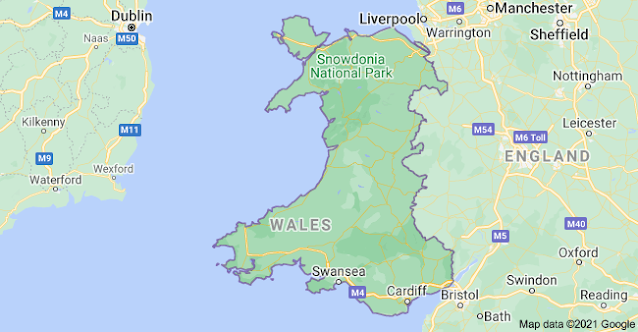
Incidentally, towns and cities of South Wales-possibly our origins before Ireland:
- Cardiff (Glamorgan) - the capital of Wales. southern end
- Newport (Monmouthshire) - Wales' third-largest city.
- Swansea (Glamorgan) - Wales' city by the sea and second-largest urban center - spectacular sandy beaches.
- St Davids (Pembrokeshire) - Britain's smallest city and home to Wales' most important cathedral.
- Now here's the corker. Great grandfather Abiathar Smith Robinson b: 1829 married Julia Ann Tuller of Royalton, Vermont and was the great grandson of Amos Benton Robinson (1734) and Deborah Hyde (1734). Deborah Hyde was connected to Anne Hyde (b:1637) who married King James Ii of England in 1660.
Resource:
https://wwwrobinsongenealogy.blogspot.com/2019/12/possible-connection-of-clans-between.html
https://wwwrobinsongenealogy.blogspot.com/2015/11/connecting-to-king-james-ii-and-his.html
https://www.military-history.org/feature/10-things-you-didnt-know-about-the-norman-conquest-of-ireland.htm
https://en.wikipedia.org/wiki/History_of_Ireland#:~:text=On%201%20January%201801%2C%20in,the%20Acts%20of%20Union%201800.
https://ireland-calling.com/irish-names-fitzpatrick/#:~:text=It%20originated%20in%20Ireland%20and,name%20with%20the%20prefix%20Fitz.&text=In%20the%2012th%20century%2C%20the,Ph%C3%A1draig%20became%20Anglicised%20to%20Fitzpatrick.
https://www.fitzpatrickclan.org/
Labels: Fitzpatrick, Frank Hugh Robinson, Henry VIII, Irish, Normans, Robinson
